This text as WORD-file: 
Interview with Paolo Federighi by Arne Carlsen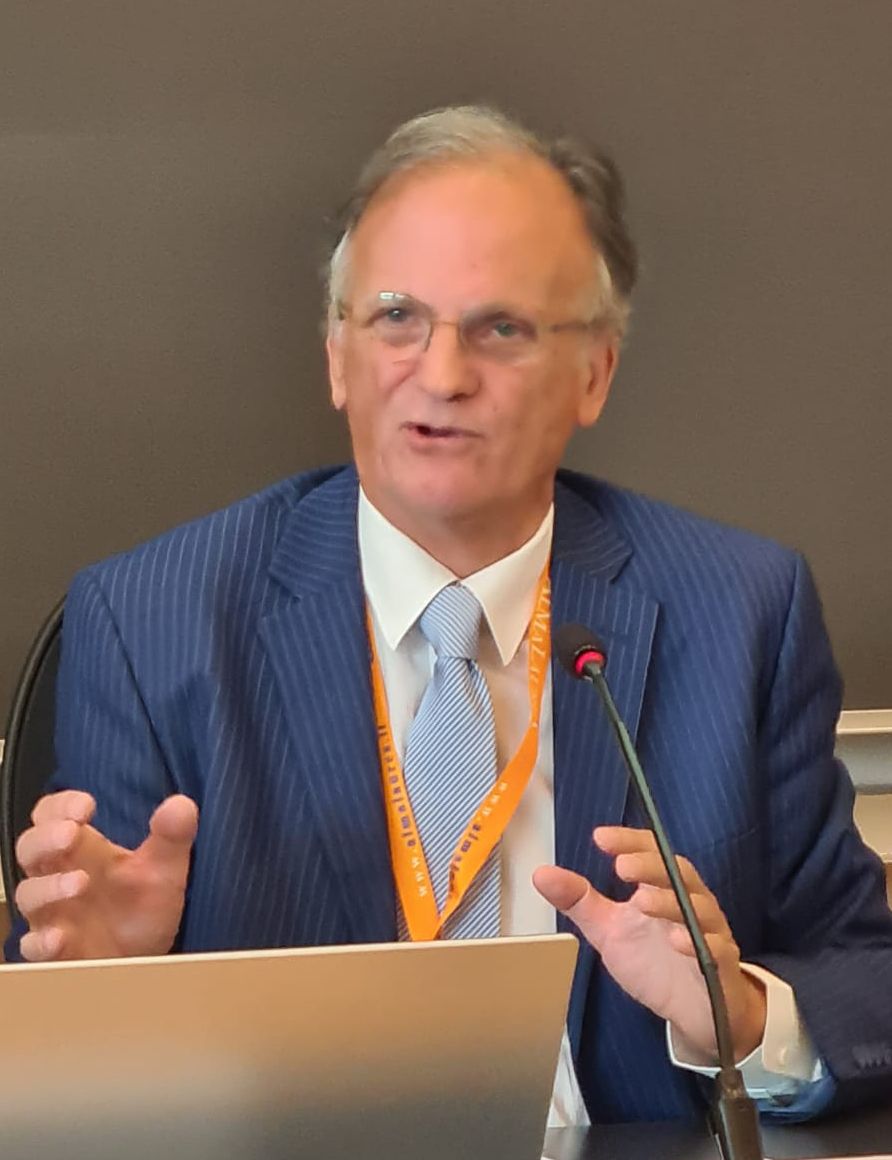 Arne:
Paolo, you are known for having advanced evidence-based policy and system effectiveness, focussing on measurable outcomes. You are often seen as an academic and system designer, developing governance and quality frameworks.
Arne:
Paolo, you are known for having advanced evidence-based policy and system effectiveness, focussing on measurable outcomes. You are often seen as an academic and system designer, developing governance and quality frameworks.
What do you consider yourself to be your biggest achievements in Adult Education? Paolo: When I think of the "biggest achievements" in the life of an adult education professional—throughout my over 60 years of work in this field—I think first and foremost of my many traveling companions. This is perhaps the most important result and the fundamental condition that allows one to operate: succeeding in choosing the best companions for the journey and the adventure, in all the fields in which one works. It is only thanks to these traveling companions that it was possible to achieve some satisfactory results. Being able to work shoulder to shoulder with excellent partners on shared objectives was the enabling factor that allowed me to obtain small and large results, all of which are a source of great satisfaction. My most significant achievement came when I succeeded in adopting a distinctly political perspective toward the adult education activities I was already carrying out on the ground—among Italian emigrants in Switzerland, in Southern Italy, within universities, and inside grassroots and recreational associations. When I realized that achieving my goals required operating at a systemic level to influence local, national, and international public policies, it transformed my entire approach. In 1983, I helped found the Italian Adult Education Association (Associazione Italiana di Educazione degli Adulti - AIDEA). It was a challenging undertaking: no political party supported us, and even the trade unions were lukewarm. Nevertheless, we managed to build a solid network and present a bill to Parliament on the right to adult education (which, unfortunately, was never debated). The Association survived until the end of the last century, later shifting its objectives and organizational structure. Ten years later, in 1992, together with colleagues and friends from nearly every European country, I founded the EAEA (European Association for the Education of Adults). This association was born from the ashes of the European Bureau of Adult Education (EBAE), a Dutch foundation based in Amersfoort that had been established in 1953. When I was elected president of the EBAE in April 1992, the European landscape was highly challenging. Since the early 1950s, only vocational training had been a priority under the European Coal and Steel Community (ECSC). It focused on training adult workers strictly to increase productivity and ensure the modernization of enterprises (Varsori, 2002). Things did not change in 1957 with the signing of the Treaty of Rome and the creation of the European Economic Community: Article 128 merely stated that the Council of Ministers should lay down general principles for implementing a common vocational training policy, conceived purely as a support tool for the common market. It was not until the 1970s that forward-thinking adult educators in Germany, the Netherlands, and France (such as Dolf, Stapel, and Lengrand) began lobbying to include adult education in European policies, finding support within the European Parliament. This advocacy finally led to the establishment in 1981 of a specific budget line (Article 634) for Continuing Education and Co-operation between Residential Centres for Adult Education. While a portion of the funds benefited historical networks (such as the International Federation of Europe Houses), the remainder financed a programme dealing with the contribution adult education could make to a number of priority fields: Within this framework, approximately 20 international meetings were organized each year. By the 1990s, inclusion policies in which the third sector and the social economy assumed a central role. The narrative surrounding education shifted as well: the concept of Lifelong Learning (LLL)—an evolution of the French tradition of éducation permanente—took hold as a cornerstone for developing a "Europe of knowledge." While this environment was favorable to non-formal adult education, the European Parliament's budget line was abruptly abolished. There was an urgent need to integrate non-formal, non-vocational adult education directly into the European Union's structural policies. This required a profound paradigm shift: many European organizations were accustomed to receiving public funding simply because they existed. This was no longer viable; we needed to establish transparent, competitive, and project-based policies. The leading European figures in the field embraced my vision—or rather our vision, since I could have accomplished nothing without Rosa Falgas, Leny Oglesby, Wolfgang Leumer, Lucien Bosselaers, Alan Tuckett, and many others. Thus, we created the EAEA, and between 1992 and 1994, we dedicated ourselves to designing transitional measures to prepare NGOs for European project management, paving the way for the launch of the Grundtvig programme. This was the result of a coordinated pan-European effort by the EAEA, working in tandem with Members of the European Parliament and national governments (most notably Rita Süssmuth and SPD parliamentarians), backed by the European Commission and Domenico Lenarduzzi. Thanks to this positioning, the EAEA played a pivotal role in the preparation of Confintea V (Hamburg, 1997). We shaped its agenda through research into public policies and launched the initiative “One hour a day for learning for all.” I believe the most significant achievement of that era was building a widespread capacity within the adult education sector to utilize European programmes, while helping to define at the EU level: In 2001, after stepping down as President of the EAEA, I helped launch EARLALL (European Association of Regional and Local Authorities for Lifelong Learning). This was a mirror organization but specifically designed to involve regional governments directly, including territories outside the borders of the European Union from its inception. The political context was dominated by the "Lisbon Strategy" of March 2000, which aimed to make Europe the most competitive knowledge-based economy in the world. The founding regions believed that the success of this strategy depended on the ability to translate macro-European objectives into micro-territorial contexts. Although competences in education and training were decentralized at the regional level, dialogue with the European Commission remained filtered by national governments; EARLALL dismantled this limitation. Ultimately, the greatest success for me is seeing that both organizations still exist and thrive today, more than thirty years later.
However, the activity that brought me the deepest joy was "transformative research" (or action research). I have always approached every role I was fortunate enough to hold as a journey of discovery, driven by a desire to innovate. Creating international organizations, negotiating European funding programmes, or drafting legislation—to me, all of these were forms of research to discover how public policies can unlock the intellectual potential of the population, both within civil society and corporate organizations. This was a long journey carried out alongside numerous social actors. It consisted of a mosaic of projects that examined the multiple facets of adult education at a systemic level—from cities and regions to the international arena. The work began with an initial census of thousands of adult education organizations active in Tuscany, which then evolved into mapping national Adult and Continuing Education (ACE) systems in collaboration with UNESCO. This baseline of knowledge was enriched by field experiments in Italy and Spain, eventually leading to a comparative study—again with UNESCO—of legislative measures supporting ACE. European projects, preparatory studies for Confintea V, and international conferences formed the ideal ground to confront the ultimate challenge: proving that scientific research could be translated into concrete public and corporate policies. We secured the funding necessary to implement at a governmental level, and within several large manufacturing companies, what our research had theorized. It was a process of empirical validation and development that I was privileged to coordinate for over two decades. The greatest satisfaction came from realizing that scientific research on educational policies was not an academic exercise for its own sake: it produced credible, sustainable, and actionable models capable of fostering social equity and creating conditions of freedom in access to knowledge. At the same time, perhaps the most fascinating realization is that this body of knowledge is never definitive. ACE policies demand constant evolution to keep pace with ongoing social and economic changes. The beauty and the challenge of this field lie precisely here: research cannot be conducted in a laboratory; it must breathe within the real-world evolution of institutions and society. When that connection is lost, one is merely writing literature.
|
 Homepage HOF-European Chapter Homepage HOF-European Chapter |
 Back to top of page Back to top of page |
|
 |